There is a particular kind of silence in Dubai that only reveals itself once you start looking for it. Not the quiet of empty space, this is a city that rarely stops, even in the toughest of times, but something more subtle. The silence between people. The distance created by long working hours, endless traffic and lives increasingly lived through screens.
And yet, step inside the right apartment on the right evening, and that silence disappears entirely.
There is music, sometimes a guitar, sometimes deep house. There is the clatter of plates, the low hum of conversation, brief introductions softening into something warmer. There is food, always food, arriving not as a transaction but as an invitation. Around the table, strangers begin, almost unconsciously, to become something else.
This is the world of Dubai’s supper clubs. And for hosts like Giordana Attilio, Dragan Šuša and Ahmed Halawa, it is less about dining and more about building something that feels increasingly rare: connection.
A table in Napoli, via Dubai
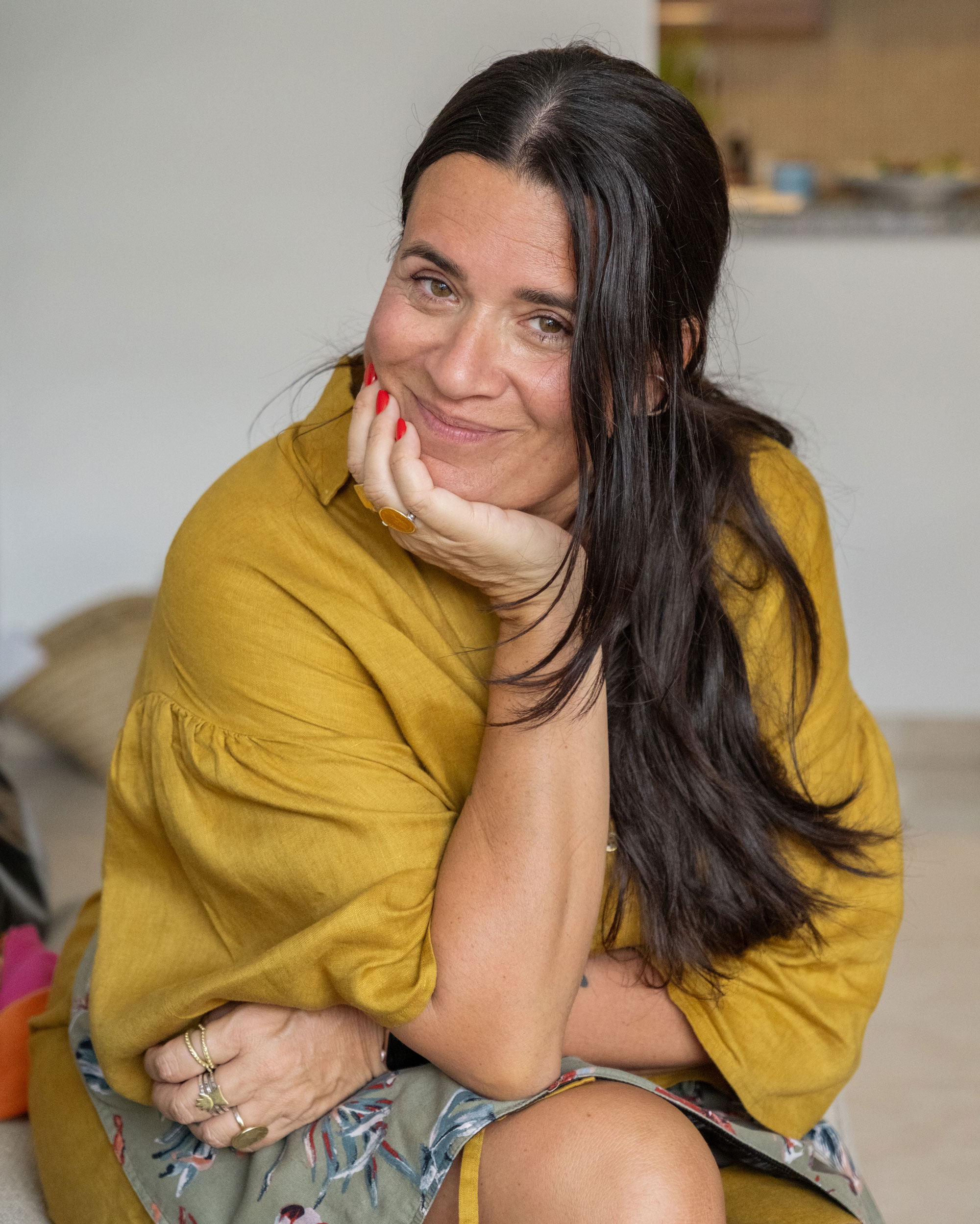
For Giordana Attilio, founder of Napoli Napoli Supper Club, the table is an extension of home, wherever in the world that happens to be.
Born in Napoli but shaped by years of travel and work across hospitality, she arrived in Dubai with a background in marketing, events and restaurant openings. Food, though, had always been there.
“There’s always been something in me that wanted to connect people,”
she says. “I wanted to be a diplomat once, an interpreter, something that puts you between people.”
Supper clubs, it turns out, became exactly that. “I don’t call myself a chef,” she explains. “I’m a host who loves to cook.”
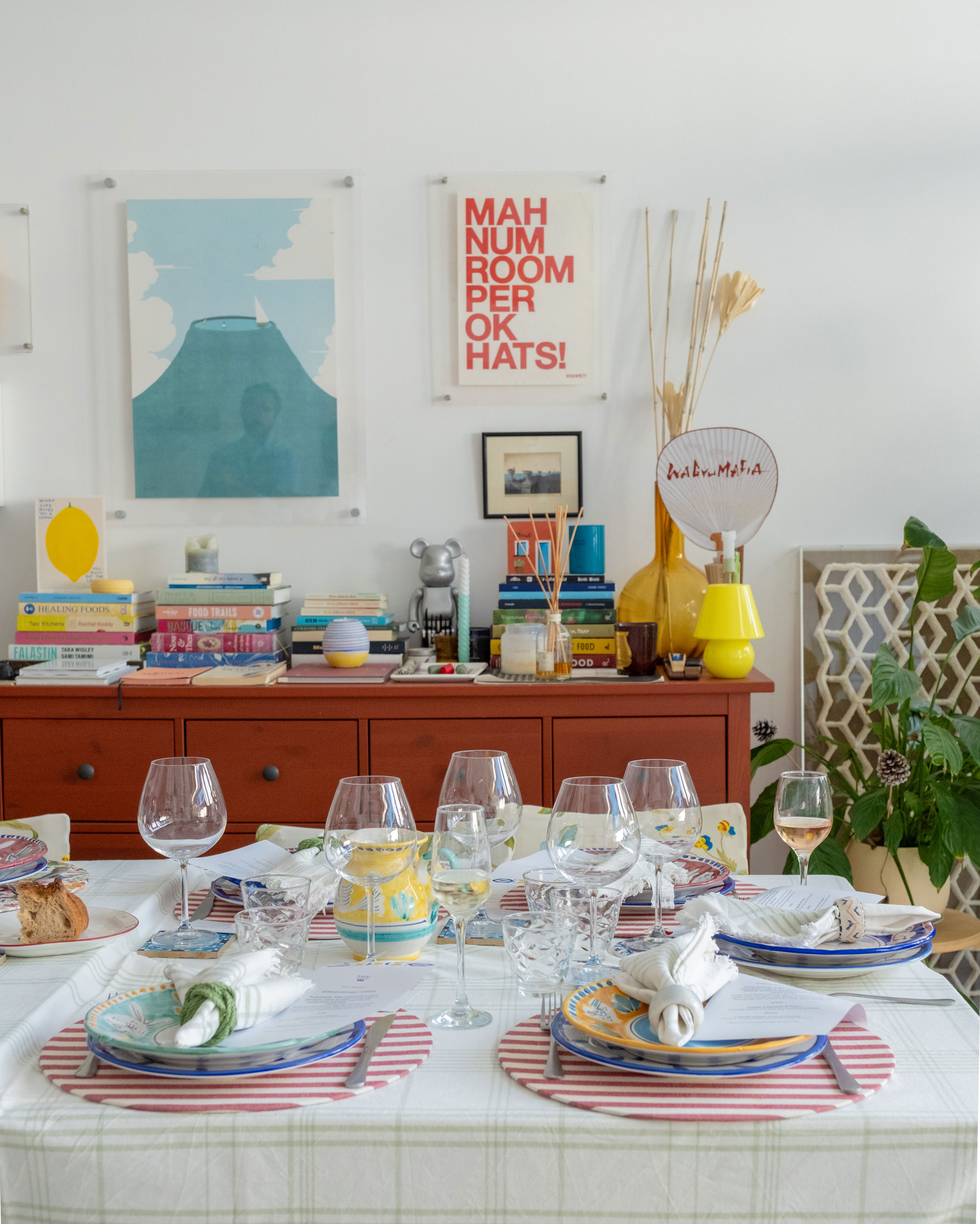
Her version of hosting is instinctive but far from accidental. Hand-painted ceramics sourced from the Amalfi Coast. Menus that shift constantly, sometimes decided the day before. Dishes that lean on memory rather than precision, frittata di spaghetti, slow-cooked ragùs, recipes that take hours and feel like they belong to another era.
“I do what the grandmothers of the 1980s would do,” she says. “Food that even now, not many people are making.”
But the food is only the beginning. What Giordana is really building is atmosphere.
Evenings often stretch long past the final course, accompanied by live music and the kind of unforced interaction that restaurants rarely allow.
“People come for the connection,” she says. “For that feeling of grandma’s food, of being looked after.”
In a city often described as transient, that feeling resonates deeply. Giordana has hosted guests from nearly 60 nationalities, many of whom arrive alone.
“I love when people do that” she says. “It means they’re pushing themselves, they want something more.”
What happens next is often unexpected. Guests become regulars. Regulars become friends. Friends start travelling together. “I went to Japan with someone I met at my supper club,” she says, still slightly bemused by it.
And perhaps most tellingly, they begin to carry the experience with them. “So many people went to Napoli after coming,” she adds. “They send me pictures. It’s beautiful, because you’ve created something that stays with them.”
A life between places
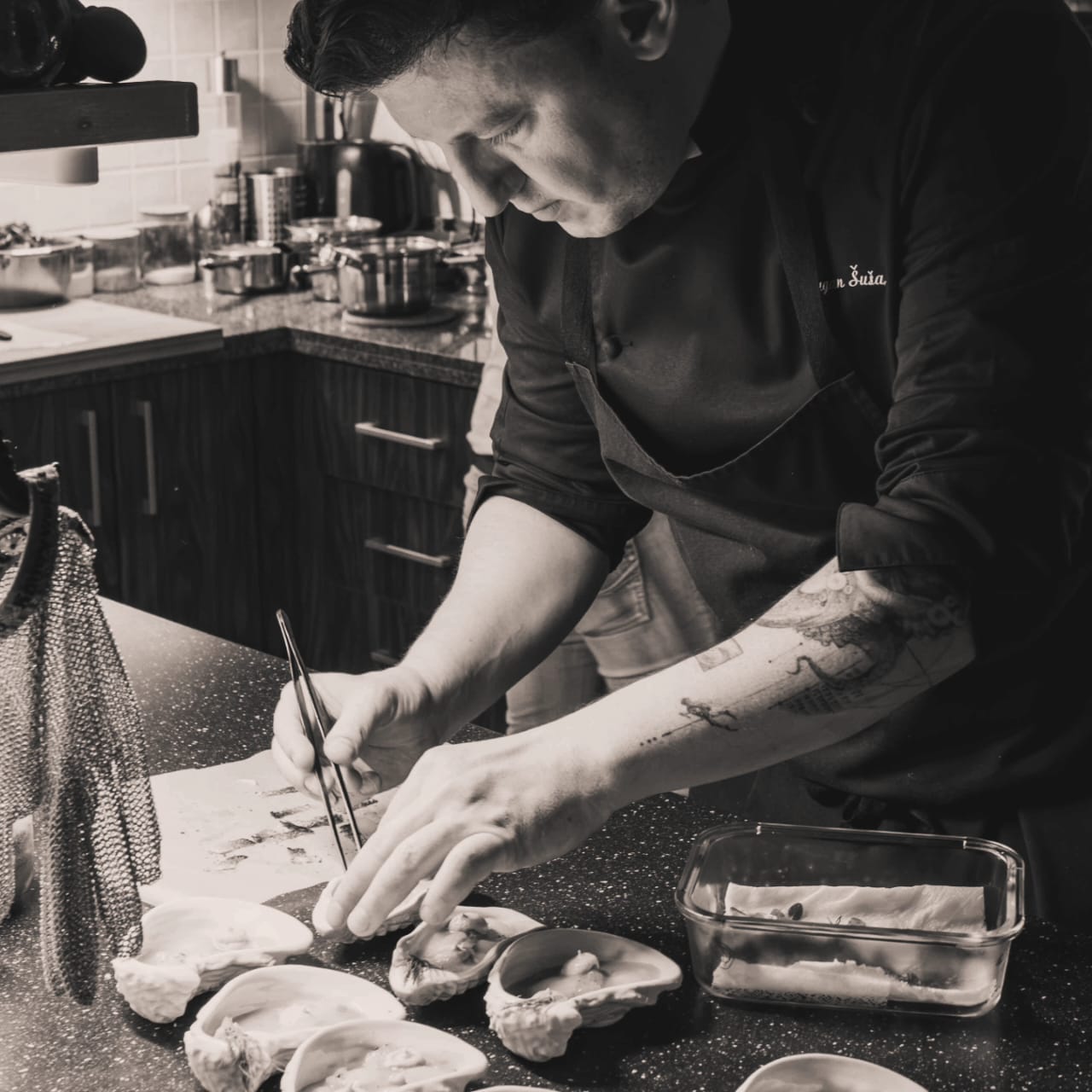
If Giordana’s story is about recreating a sense of place, Dragan Šuša’s is about navigating life without one.
“I was born in a country that no longer exists,” he says. “The country it became doesn’t welcome me, and the one that shaped me will always see me as a refugee.”
It is a statement delivered without self-pity, but it underpins everything he does.
A self-described nomadic chef, Dragan’s cooking pulls from across the Adriatic and Mediterranean, Greek, Italian, Dalmatian influences layered into dishes that reflect a life spent moving.
Dubai, for now, is home. But the idea of home itself remains fluid.
“Born in one place, shaped by many,” he says. “My heart travels.”
His supper club, Koužina, reflects that same movement. It is less about strict tradition and more about storytelling, plates that echo different coasts, different kitchens, different chapters of his life.
But like Giordana, what he is really creating is something beyond the plate.
“I love creating moments through food,” he says. “Exploring cultures, bringing people together, finding that energy that feels like home.”
There is a quiet honesty to the way Dragan approaches hosting. No rigid concept, no forced narrative. Just a table, a mix of influences, and an openness that allows people to meet somewhere in between.
Building belonging, one dinner at a time
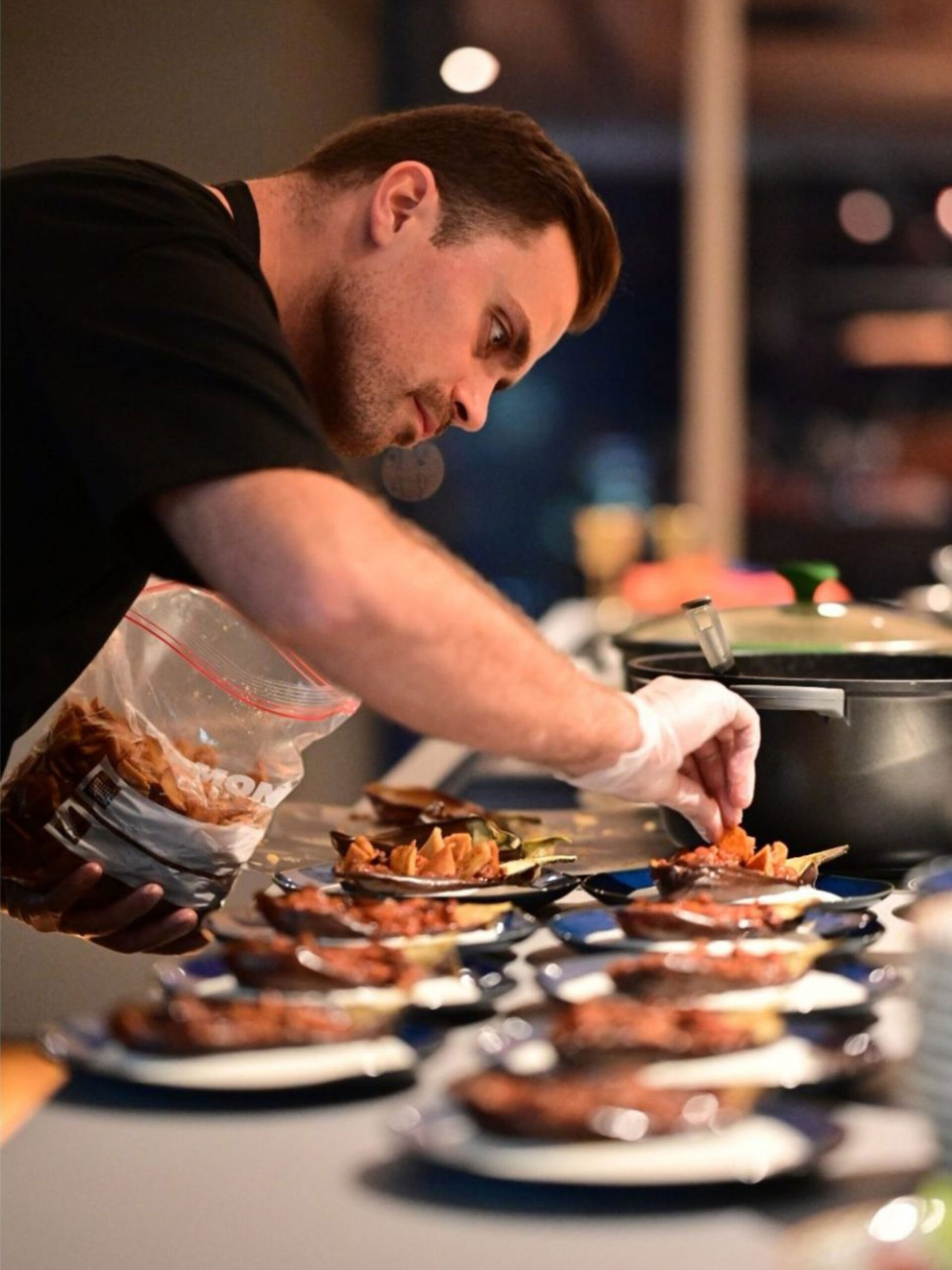
For Ahmed Halawa, the table is something even more fundamental: a way of reclaiming identity.
His story begins, as many do, with food. A childhood memory in Kuwait, digging a hole in the ground to cook a potato over charcoal. A simple act, but one that stayed with him.
From there, the path was anything but linear, Jordan, Cairo, a career in marketing, long days in boardrooms. But something was missing.
“I wanted something more,” he says. “Something more exciting.”
He began hosting supper clubs in late 2019, just months before the world shut down for COVID. What started as small, intimate gatherings quickly evolved into something much larger, not in scale, but in meaning.
“The main reason was to get people to slow down,” he says. “We all have very fast weeks. I wanted to create a space where people could come, share, and feel safe.”
At the heart of it is a deep understanding of what many in Dubai experience but rarely articulate.
“People are getting lonelier,” he says plainly. “Everyone is tied to their phones, working remotely. There’s been a shift in human connection.”
Supper clubs, in his view, are not a product or a service. “This is not transactional,” he says. “It’s something sensitive. It needs to be nurtured.”
That sensitivity runs through everything he does. From the storytelling woven into each dish to the careful balance between tradition and evolution. Main courses remain rooted in Palestinian heritage; appetisers become a space for creativity.
“There’s a level of respect you cannot cross,” he says. “You can’t mess with certain recipes. But we’re not one-dimensional either, we can evolve.”
The result is an experience that feels both deeply personal and widely accessible. Guests arrive curious, often well-travelled, but leave with something more intangible.
“A sense of belonging is powerful,” he says. “Sometimes people don’t even know why they feel the way they do. They just want to belong.”
The city, slowing down
Across all three stories, there is a common thread, not just food, not just hospitality, but a response to something happening in the city itself.
Dubai has always been fast. That is part of its appeal. But speed comes with trade-offs. Over time, many residents have felt a subtle shift: more competition, less connection. More noise, less meaning.
And in recent months, that feeling has only intensified. Then the conflict between the US & Israel and Iran began and people started going out less. The city emptied. Those who remain are staying closer to home. Reassessing what matters.
In that context, supper clubs feel less like a trend and more like a correction.
“There’s something in human nature that pushes us to come together,”
Ahmed says. “Sometimes there’s a call from within, you have to be closer to others.”
Giordana sees it in her guests. Dragan feels it in the rooms he creates. It is there in the way strangers linger a little longer than expected, in the ease with which conversations begin to flow.
It is not always perfect. Not every table becomes a lifelong connection. But more often than not, something shifts. And perhaps that is enough.
More than dinner
What these three hosts are building is not easily categorised.
It sits somewhere between restaurant and home, between performance and spontaneity, between past and present.
Their stories are mirrored in other supper clubs across the city.
It is, at its core, an attempt to create something human in a place that at times is at risk of feeling anything but. However, since March 21, things have changed. It has placed a sense of community at the top of these three hosts’ agendas.
“Did people leave happier than when they arrived?” Ahmed says. “That’s how I think about it. Almost like maths.”
For Giordana, it is simpler. “It’s about making people feel at home,” she says. “Even if they’ve never been there.”
And for Dragan, it is perhaps the most personal of all. A way of anchoring a life lived between places, if only for an evening.
Around these tables, Dubai slows down. Just a little.
Long enough for people to look up from their phones, share a story, pass a plate, recognise something familiar in someone they’ve just met.
In a city built on movement, that might be the most meaningful thing of all.